Updated June 2026
What Is Collision Coverage Insurance?
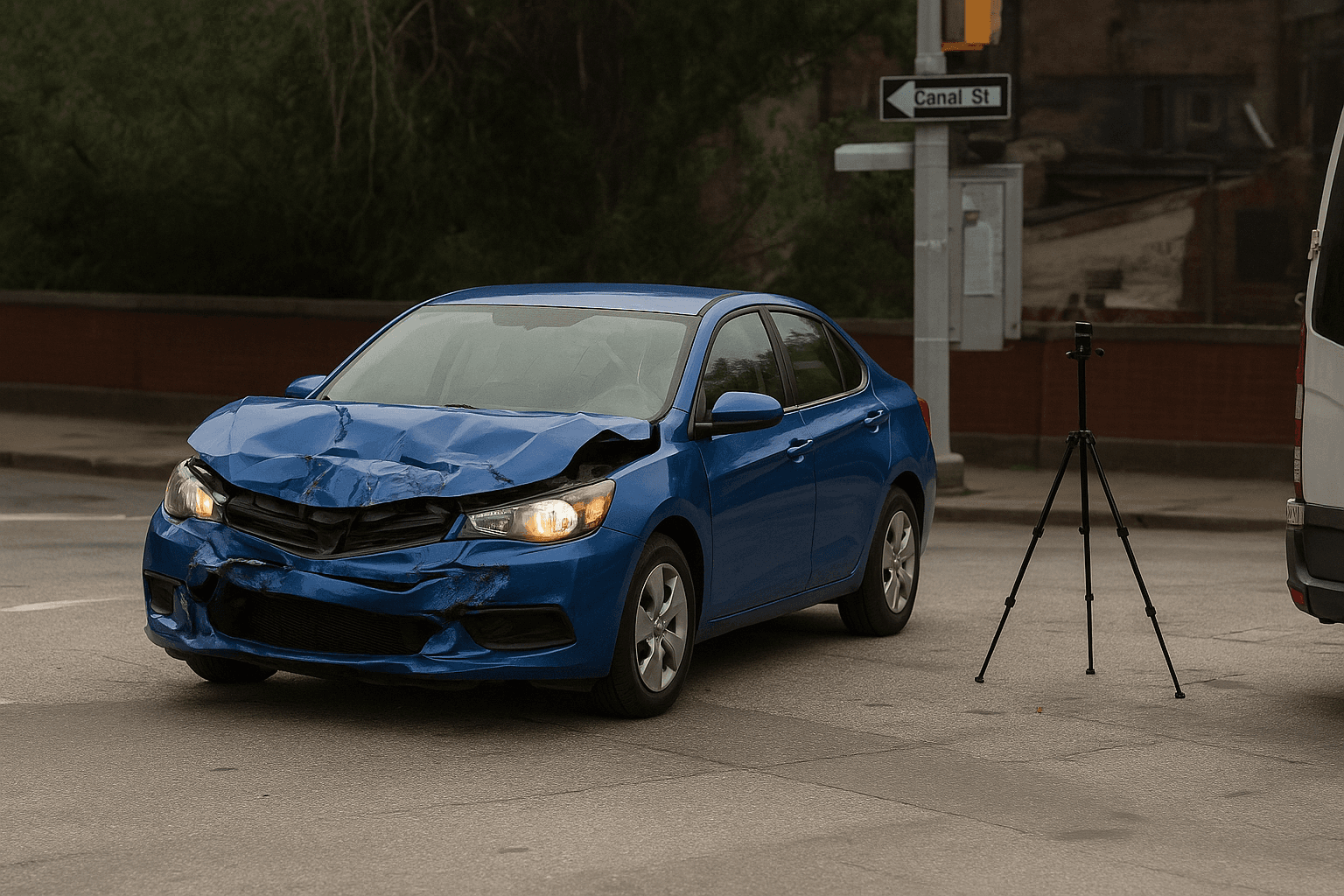
Collision coverage pays to repair or replace your vehicle after it hits another car, a stationary object like a guardrail or mailbox, or rolls over. It applies whether you caused the accident or the other driver did, and whether your car was moving or parked when struck. The insurer pays the lesser of repair cost or actual cash value minus your chosen deductible, typically between $250 and $2,000. If you finance or lease a vehicle, the lender requires collision coverage until the loan is satisfied.
- You brake late and hit the car ahead, causing $4,200 in damage to your front bumper and hood. The other driver's repair bill is $3,800. Your collision coverage pays $3,700 of your repair after your $500 deductible. Your liability coverage pays the other driver's $3,800 bill in full. Without collision, you pay the $4,200 yourself.
- You return to find $2,900 in body damage and no note. Your collision coverage pays $2,400 after your $500 deductible. If you have uninsured motorist property damage coverage with a lower deductible, that may cost less out-of-pocket, but not all Virginia policies include it. Without collision, you pay the full $2,900.
- Your insurer declares the vehicle a total loss valued at $8,500. Collision pays $8,000 after your $500 deductible. If a deer had struck your car instead of you swerving to avoid it, comprehensive would apply. The distinction matters because collision and comprehensive carry separate deductibles, and many retirees choose higher collision deductibles to lower premiums on vehicles they drive infrequently.
Who Needs Collision Coverage Insurance?
Retirees with a vehicle financed or leased must carry collision until the loan satisfies. Those with a newer paid-off vehicle worth more than ten times the annual collision premium benefit from coverage, as a single claim recoups years of premium. Drivers who park on the street in high-density areas face elevated hit-and-run risk that collision mitigates, especially if uninsured motorist property damage coverage is absent or carries a higher deductible.
Divide your vehicle's actual cash value by the annual collision premium. If the result exceeds ten, collision earns its cost. If it falls below five, dropping coverage and self-insuring saves money over time. Between five and ten, consider your savings cushion, replacement vehicle access, and risk tolerance. Retirees who garage their car, drive under 5,000 miles annually, and have $4,000 set aside for a replacement often gain more by dropping collision on a vehicle worth $6,000 or less.
How Much Does Collision Coverage Insurance Cost?
Collision typically adds $25–$75 per month to a Virginia retiree's premium, or $300–$900 annually, depending on vehicle value, deductible, and the insurer's assessment of local collision frequency.
- Vehicle replacement cost—a $12,000 sedan costs less to insure for collision than a $40,000 SUV because the maximum payout is lower.
- Chosen deductible—selecting a $1,000 deductible instead of $250 can cut collision premium by 30–40 percent.
- Garaging zip code—urban Virginia zip codes with higher collision claim rates price higher than rural areas with less traffic density.
- Driver age and record—retirees with clean records often qualify for mature driver discounts that reduce collision cost 5–10 percent.
- Annual mileage—usage-based or low-mileage programs reduce collision premium for retirees driving under 7,500 miles per year, as fewer miles mean lower collision probability.
- Bundling and loyalty—carriers writing homeowners policies in Virginia frequently discount collision 10–20 percent when both policies sit with the same insurer.