
When the Last Payment Clears
You made the final payment on your sedan three months ago. The lien-holder notification arrived from your carrier confirming they no longer require collision and comprehensive. Your agent never called to discuss whether you still need it. Your renewal notice shows the same premium with full coverage intact, and you're wondering whether you're paying for protection that no longer earns its cost.
This is the decision carriers won't initiate for you. Once the loan requirement disappears, the coverage choice becomes entirely yours. Virginia law requires liability only—bodily injury minimums of $50,000 per person and $100,000 per accident, plus $40,000 property damage. Collision and comprehensive protect your asset, not the state's interest. The question is whether your asset justifies the annual cost.
Compare rates from carriers that specialize in senior drivers
Mature driver discounts, low-mileage rates, and coverage reviews — see what you're actually eligible for.
Get Your Free QuoteVirginia Property Damage Minimum
$40,000
This is the floor for damage you cause to another driver's vehicle. It does not cover your own car—that's where collision and comprehensive come in, and where the paid-off-vehicle judgment call lives.
Va. Code §46.2-472
The Structural Reality Carriers Don't Frame
Full coverage is a bundling term, not a legal one. It typically means liability plus collision plus comprehensive. Virginia statute requires the liability portion. The collision and comprehensive portions exist to protect your financial interest in the vehicle. When you financed the car, the lender's interest made the choice for you. Now that you own it outright, the math shifts.
Collision pays to repair your vehicle after an at-fault accident or a hit with an object. Comprehensive pays for theft, vandalism, weather damage, and animal strikes. Both carry a deductible you choose—commonly $500 or $1,000 in Arlington. The annual premium for both coverages combined often runs $600 to $1,200 for a moderately valued sedan, depending on the vehicle's age, your ZIP code, and your driving record.
The critical number is your car's current actual cash value. Carriers pay the lesser of repair cost or actual cash value minus your deductible. If your 2014 sedan with 110,000 miles is worth $5,500 and you carry a $1,000 deductible, the maximum you can recover in a total-loss scenario is $4,500. If your annual collision and comprehensive premium is $900, you're paying one-fifth of the maximum possible payout each year.
The blocker: you lack a clear threshold for when the premium-to-asset-value ratio tips against keeping full coverage, and your carrier has no incentive to tell you.
The Asset-Value Decision Framework
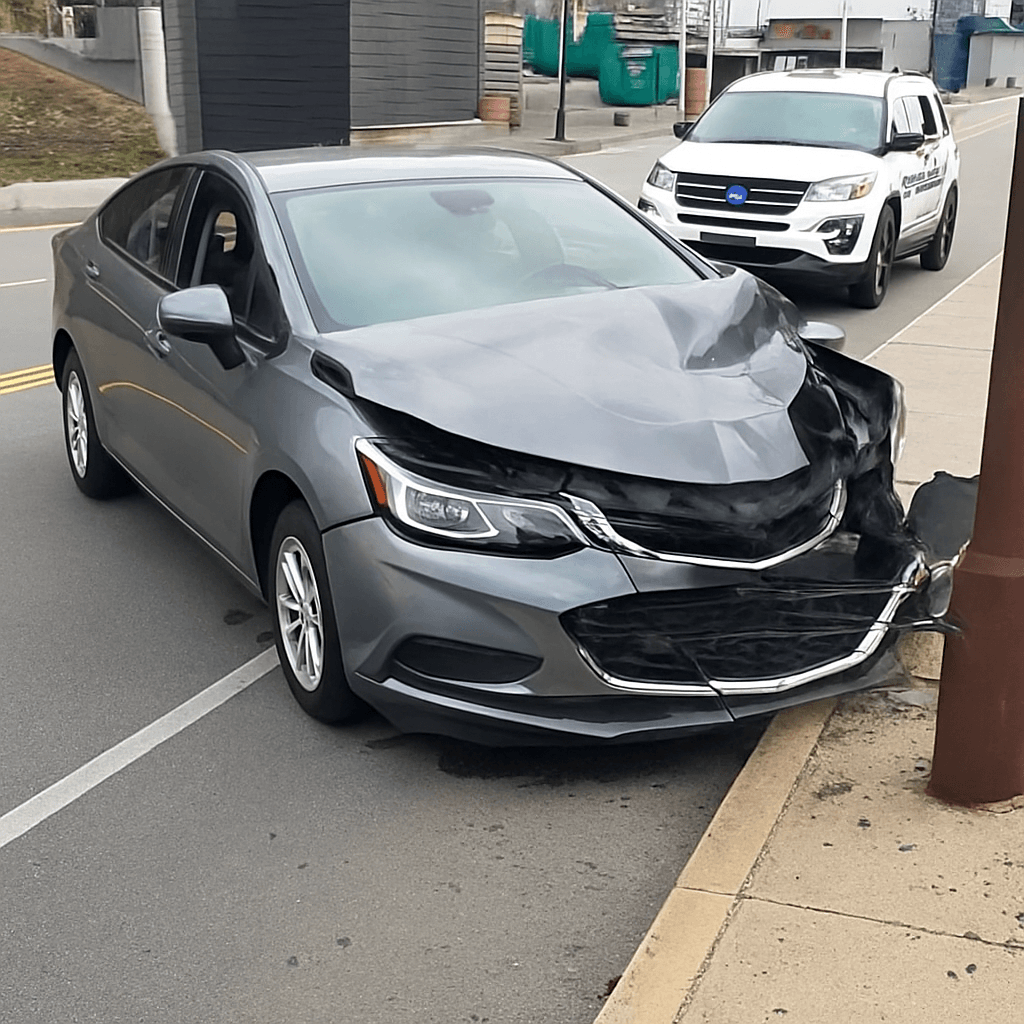
Start with your vehicle's current market value. Check NADA, Kelley Blue Book, or recent private-party sale listings for your make, model, year, and mileage in the Arlington area. Subtract your deductible from that figure—that's your maximum net recovery. Now compare your annual collision and comprehensive premium against that net recovery. If you're paying $850 annually to protect a net $4,200 asset, you're spending roughly 20% of the recoverable value each year.
The second part of the framework is replacement capacity. If your vehicle were totaled tomorrow, could you replace it from savings without financial strain? Retirees on fixed income often answer no, which tilts the decision toward keeping coverage even on a moderately valued car. Conversely, if you have $15,000 in an accessible account earmarked for the next vehicle and your current car is worth $6,000, self-insuring the risk may be the rational choice.
Related Articles



Arlington-Specific Carrier Behavior and Failure Modes
Not all carriers writing in Arlington handle mid-term coverage changes the same way. State Farm, GEICO, Progressive, and Nationwide all allow you to drop collision and comprehensive mid-term and apply the premium credit to future payments. Some carriers require you to wait until renewal to make the change without a pro-rated refund, which means you pay for coverage you've decided to drop for the remainder of the term.
The failure mode most retirees encounter: they drop full coverage, then realize six months later they want it back after a minor fender-bender scare or a hailstorm warning. Restoration is not automatic. Carriers typically allow you to add collision and comprehensive back at renewal without underwriting questions, but adding them mid-term may trigger a vehicle inspection or require proof of no recent unreported damage.
A second failure mode specific to Arlington: street parking and deer. Arlington County has no mandated off-street parking requirement for older residential neighborhoods. If you park on-street in Clarendon, Ballston, or along Columbia Pike, your vehicle faces hit-and-run risk, vandalism, and side-swipe exposure that collision covers. Comprehensive covers the deer strike risk along Route 50, Lee Highway, and George Washington Parkway—routes Arlington retirees use frequently. These aren't hypothetical: Arlington Police collision reports show consistent street-parking claims, and Virginia Department of Wildlife Resources data confirms elevated deer-vehicle incidents in Arlington ZIP codes 22207, 22205, and 22213.
Carriers Writing Virginia Policies
25
The injected carrier data block confirms 25 carriers active in Virginia, including all major standard-market and several non-standard options. Not all handle mid-term coverage changes identically—ask before you drop.
Virginia Bureau of Insurance active carrier registry
The Medicare Coordination Layer
If you're on Medicare, medical payments coverage and personal injury protection interact with your health insurance in ways your agent may not explain clearly. Virginia does not require PIP. Medical payments coverage is optional. Both pay medical expenses resulting from an auto accident regardless of fault, and both are subject to coordination-of-benefits rules with Medicare.
Medicare is always secondary when another payer exists. If you carry $5,000 in medical payments coverage and sustain $8,000 in accident-related medical bills, your auto policy pays the first $5,000 and Medicare pays the remainder subject to its usual deductibles and coinsurance. Dropping medical payments coverage means Medicare moves to primary, but you lose the supplemental layer that pays before Medicare's gaps apply. For retirees with Medigap or Medicare Advantage plans, the decision depends on your plan's accident-related coverage terms—review your Summary of Benefits before making the change.
When to Keep Full Coverage Despite the Math
The 10% rule of thumb is a starting point, not a directive. Some retirees rationally keep collision and comprehensive on paid-off vehicles well past the threshold. If your vehicle is your only transportation and replacing it would require liquidating retirement assets at an inopportune time, the premium functions as predictable budget protection. If you live in an Arlington ZIP code with higher-than-average theft or vandalism rates—22204 and 22206 show elevated comprehensive claims per Virginia Bureau of Insurance data—the coverage may justify its cost even on a vehicle worth $7,000.
Conversely, if you own two vehicles, drive fewer than 5,000 miles annually, and have accessible savings exceeding three times the vehicle's value, dropping full coverage and banking the annual premium often produces better financial outcomes over a five-year horizon. The decision is positional, not formulaic. Your household's asset liquidity, your access to alternative transportation, and your risk tolerance matter more than any single percentage threshold.
The Next Step You Control
Request a declaration page from your current carrier showing your vehicle's actual cash value as they've recorded it, your current collision and comprehensive premium broken out separately, and your deductible amounts. Compare that annual cost against the net recoverable value. Call three carriers writing in Arlington—select from State Farm, GEICO, Progressive, Nationwide, or Allstate based on the injected data block—and ask two questions: what do you estimate my vehicle's actual cash value to be, and what is your collision and comprehensive premium if I keep it versus your liability-only quote if I drop it. The delta between those two quotes is the annual cost of the decision. Now you have the comparison your original agent never initiated.